





Most online stores don’t have a traffic problem. They have a conversion problem.
Visitors arrive, browse a few pages, and leave without buying. The cart gets loaded and then abandoned. The product page looks fine on paper but fails to close. Sound familiar? You’re not alone. Cart abandonment averages 70% globally, representing $260 billion in recoverable lost orders every single year.
That is not a small gap. That is a massive, fixable revenue leak.
Here is the truth: more ad spend will not solve a broken funnel. The stores growing fastest right now are not outspending their competitors. They are out-converting them. And the difference almost always comes down to a handful of smart, deliberate decisions made across the buyer’s journey.
At Geek Web Solution, we have built and optimized eCommerce websites for 450+ clients across India and globally since 2016. Over 1,370+ projects, we have seen exactly what moves the needle. This guide covers the 10 strategies that consistently deliver real results.

Mobile now drives over 70% of all eCommerce traffic. Yet most stores still treat it as secondary. That is a costly mistake.
Every one-second delay in mobile load time reduces conversions by approximately 7%. On a store doing $10 million in annual sales, that single delay costs around $400,000 per year.
Start by testing your store on a real phone, not a browser resize. Is the checkout thumb-friendly? Do images load fast? Are buttons large enough to tap without zooming in? Fix these before spending another rupee on ads. A store that loads in under two seconds will always outperform one that loads in four, no matter how good the products are.
Your product page does the selling when no human is in the room. Most store owners underestimate how much this matters.
42% of consumers judge an eCommerce business’s quality based on design alone. A single blurry image or a vague two-line description can quietly kill your conversion rate without you ever knowing.
Show your product from multiple angles. Write copy that speaks to the buyer’s actual problem, not just the product’s features. Add size guides, care instructions, or usage videos where relevant. Place reviews right below the product description so hesitant buyers don’t have to scroll to find proof. Every element on that page should be working to move the customer forward.
Someone added your product to their cart. That is intent. Don’t let it go to waste.
A basic three-email cart abandonment sequence, sent at one hour, 24 hours, and 72 hours, can recover a significant slice of that lost revenue. Keep the tone helpful. Remind them what they left behind. Address potential objections like shipping cost or return policy. A small incentive in the third email often closes the deal.
Social remarketing lets you follow up with customers who added items to their cart but didn’t complete the purchase, nudging them to convert on their own time and from any device. Pair email with retargeting ads on Meta and Google so you are showing up across multiple touchpoints instead of relying on just one channel.
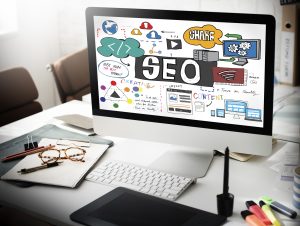
Paid ads are fast. SEO is permanent. The smartest stores do both, but they never neglect SEO.
One electronics eCommerce store shifted from paid ads to SEO and grew monthly revenue from $8,000 to $30,000 without increasing ad spend. The strategy was straightforward: high-intent keyword optimization on product and category pages, technical SEO fixes, and consistent link building.
For your store, that means making sure your product pages are structured for search. Clear headings, keyword-rich descriptions, schema markup for product ratings, and fast page speeds all send the right signals to Google. A strong SEO strategy for your online store brings in buyers who are already looking for what you sell. That is the highest-quality traffic you can get.
The easiest person to sell to is someone who is already buying from you. Yet most stores complete one transaction and move on. That is leaving serious revenue on the table.
Add a “Frequently Bought Together” section on product pages. Show a complementary item in the cart. Offer a one-click post-purchase upsell on the thank-you page for something small, relevant, and lower in price than what they just ordered.
Combining related products into bundles at a discounted price is a proven way to increase average order value without requiring a single extra visitor. Even a 10% increase in average order value across your existing traffic can have a bigger impact on profitability than doubling your ad budget.
Online shoppers cannot touch your product. They cannot look you in the eye. What they can do is look for reasons to trust you, and if they don’t find them quickly, they leave.
Free shipping increases conversion rates by 20%, and 93% of consumers say they buy more when free shipping is available. If you can offer it above a minimum order threshold, do it. Display it prominently near your add-to-cart button, not buried in the footer.
Beyond shipping, add SSL certificates and display security badges at checkout. Make your return policy visible on every product page. Show real customer reviews with photos. List a phone number and physical address. Each of these signals reduces hesitation and makes a first-time buyer feel safe enough to complete the purchase.
Relying on a single marketing channel creates dangerous vulnerability to algorithm changes, policy shifts, or increased competition. The stores growing consistently in 2026 are showing up across multiple platforms in a coordinated way.
Instagram Shopping, Facebook Shop, and TikTok Shop now let customers buy without leaving the platform at all. That removes friction and shortens the path to purchase. Social media should not just be where you advertise. It should be where you sell.
Pick the one or two platforms where your target buyers actually spend time and build a real presence there. Show your product in use. Share customer content. Go live. The brands doing this are not just getting followers. They are getting direct sales from social and building brand equity at the same time.
New channels come and go. Email stays, and it keeps performing.
Email marketing converts at 5.3%, making it one of the highest-performing traffic sources for eCommerce, second only to referral traffic at 5.4%. Paid search, by comparison, converts at just 1.4%.
The difference between stores that get great results from email and those that don’t comes down to segmentation and automation. Build a welcome sequence for new subscribers. Create a post-purchase flow that encourages repeat buying. Set up a win-back campaign for customers who have not bought in 90 days. Segment by purchase history, browse behavior, and location. When your emails feel relevant, they get opened and they convert.
Your checkout is where good intentions go to die. Every extra field, every surprise fee, every confusing step pushes a buyer closer to closing the tab.
The most successful eCommerce stores have implemented mobile-first checkout designs with thumb-friendly layouts, streamlined form fields, and payment options that integrate with mobile wallets.
Enable guest checkout. Accept UPI, Google Pay, and Buy Now Pay Later options prominently. BNPL boosts checkout conversion by up to 30%, and BNPL users spend 72% more per transaction than other online shoppers. Show a progress bar so buyers know they are almost done. Display your return policy and security icons right on the checkout page. Cut the number of steps to the absolute minimum. A checkout that takes 45 seconds will always outperform one that takes three minutes.
Acquiring a new customer costs five times more than keeping an existing one. Yet most marketing budgets are almost entirely focused on acquisition. That math doesn’t work long-term.
Loyalty programs increase retention and turn satisfied customers into brand advocates who actively refer new buyers to your store.
Start simple. Reward points for every purchase. Give a discount for referrals. Create a VIP tier with early access to sales for your most loyal buyers. Make progress visible. When customers can see how close they are to their next reward, they come back to earn it. Over time, loyalty programs improve Customer Lifetime Value, which is the single most important metric for sustainable eCommerce growth.
Before optimizing, you need a benchmark. The global average eCommerce conversion rate reached 2.5% in Q3 2025. Stores converting above 3.2% rank in the top 20% of all eCommerce sites. Hit 4.7% or higher and you are in the top 10%.
Most stores sit well below that average. If your store is converting at 1% or less, the problem is almost always one of these: slow load times, a confusing checkout, weak product page copy, or a lack of trust signals. Fix these first before scaling traffic.
The fastest wins come from fixing cart abandonment emails, improving mobile load speed, and adding trust signals to your checkout page. These changes require no extra ad spend and can show measurable results within days.
SEO brings in high-intent buyers who are actively searching for what you sell. Unlike paid ads, this traffic does not stop when you pause spending. Well-optimized product and category pages compound over time and deliver some of the highest-converting traffic available.
The global average is around 2.5%. Top-performing stores hit 3.2% to 4.7% and above. If your store is below 1.5%, the issue is almost always speed, trust, or checkout friction, not traffic volume.
We have been building eCommerce websites since 2016, across Shopify, WooCommerce, Magento, and custom platforms. In that time, we have worked with 450+ clients and delivered 1,370+ projects for businesses ranging from Surat-based startups to global brands.
We don’t just build stores. We build stores designed to convert. That means speed-optimized code, mobile-first layouts, SEO-ready structure, and checkout flows tested to reduce drop-off at every stage.
Whether you are starting a new Shopify or WooCommerce store or want an honest audit of what is holding your current one back, we know what to look for. And we will tell you exactly what needs to change.
If your store is getting traffic but not converting, or if you are ready to build something new and get it right from day one, we would love to help. Get in touch with the Geek Web Solution team at geekwebsolution.com